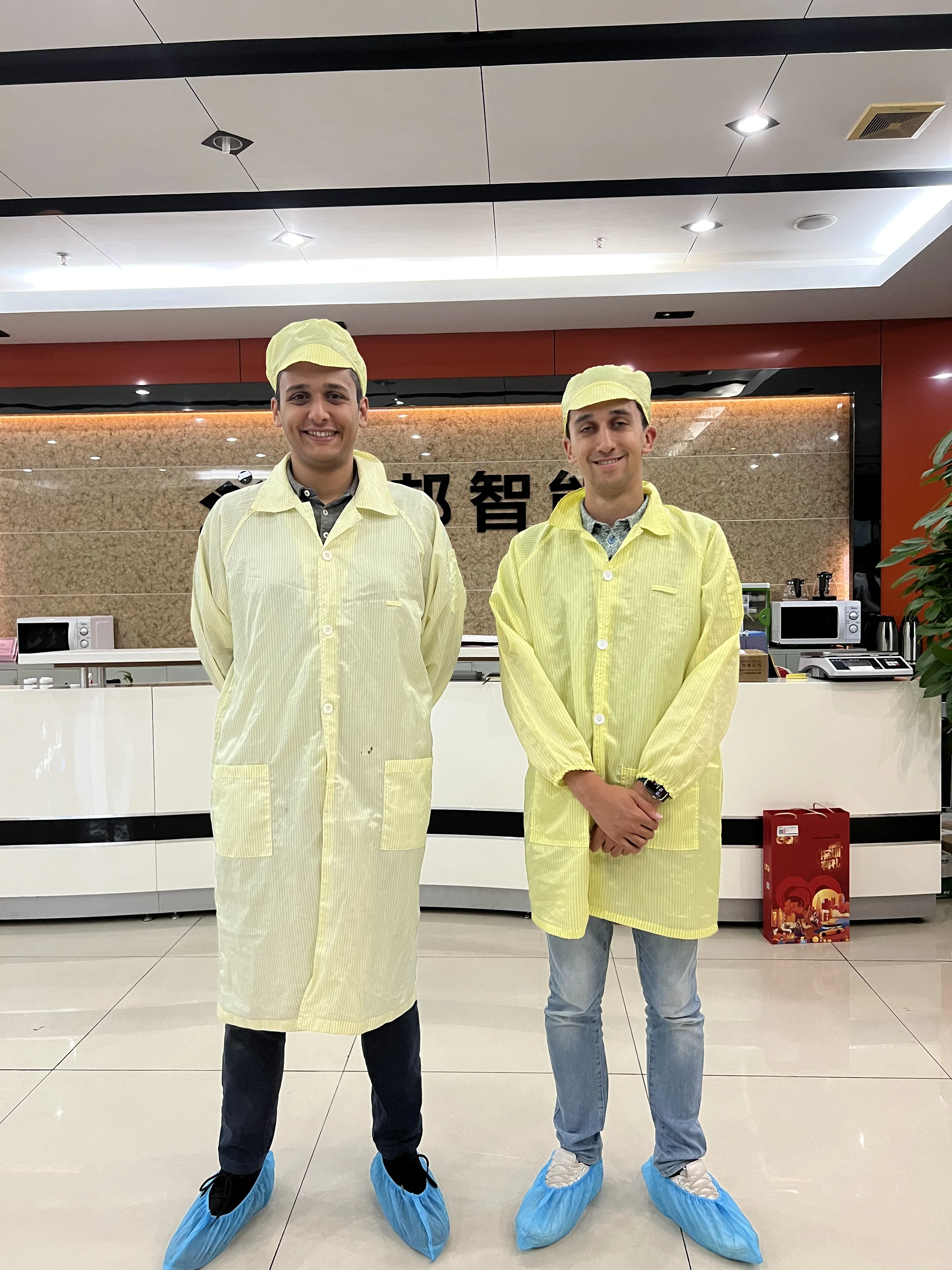
Selling a connected device in Europe starts with the CE mark. Without it you legally can't put the product on the market. For a lot of IoT startups the route from prototype to certified product stays murky right up until it gets expensive.
So here is the whole path: which directives apply, what goes in the technical file, which pre-compliance tests are worth running, and how to choose a lab that won't stall you.
What the CE mark actually means
CE stands for Conformité Européenne. It is your own declaration that the product meets the EU law that applies to it. Nobody hands it to you, and it is not a quality badge from an outside party. You declare it, and a technical file has to back that up.
Most IoT devices have to deal with four directives. RED, the Radio Equipment Directive 2014/53/EU, covers anything with a radio in it: BLE, Wi-Fi, LoRa, cellular. LVD, the Low Voltage Directive 2014/35/EU, covers mains-powered devices above 50V AC or 75V DC. The EMC Directive 2014/30/EU covers anything that could emit interference or be disturbed by it. RoHS, 2011/65/EU, restricts hazardous substances.
A battery-powered sensor talking over BLE or Wi-Fi usually lands on RED and RoHS. A mains-connected gateway adds LVD and EMC on top.
The technical file
Before a single lab test, you need a technical file. It is the package that proves your product conforms, and it holds six things:
- A product description: what the device is, what it's for, which markets.
- The list of harmonised standards you applied. For example EN 300 328 for 2.4 GHz Wi-Fi and BLE, EN 62368-1 for safety.
- Design documents. Schematics and PCB layout files, at minimum the layer stackup and copper pours.
- A risk assessment, particularly for safety under LVD and RED Article 3.1a.
- Test reports from an accredited lab.
- The Declaration of Conformity, signed by the responsible person in the EU.
You don't submit this file to anyone upfront. It just has to exist, be accurate, and be ready if a market surveillance authority asks. Keep it for ten years.
Pre-compliance: find the problems while they're still cheap
Pre-compliance testing is informal RF and EMC testing you run yourself, or with a consultant, before you pay for accredited lab time. A one-day session costs a fraction of a lab submission and can save you months of re-testing.
For a BLE or Wi-Fi product, four checks earn their keep:
A radiated emissions scan, looking for accidental emitters above the Part 15 Class B limits. BLE transmit power and frequency accuracy, to confirm you're within ±20 kHz and at the right power. Conducted emissions on the power lines, to check that your switcher's spurs stay under the EN 55032 limits. And ESD immunity, where you touch every exposed piece of metal and every connector with a discharge gun. A handheld unit is good enough for pre-compliance.
What usually turns up:
- Clock harmonics from the MCU oscillator radiating through the PCB ground plane
- USB D+ and D- lines behaving like antennas
- Switching regulator noise coupling into the RF front end
- The plastic housing resonating and amplifying emissions at particular frequencies
Every one of those is fixable with a layout tweak or a filter. Only if you find them before the lab does, though.
Choosing a lab
For RED you need an accredited lab, and for some product classes it has to be a notified body. Not every accredited lab is one. For most Class 1 radio devices, meaning BLE and Wi-Fi under 100 mW, you can declare conformity yourself once an accredited lab has done the testing.
European labs like SGS Netherlands, TÜV Rheinland and Bureau Veritas are excellent. They also run 4 to 8 week queues and are noticeably more expensive per submission.
Labs in Shenzhen are a different trade-off. Many are CNAS-accredited and ILAC-recognised, and they can turn a standard IoT BLE or Wi-Fi submission around in 5 to 10 working days at substantially lower cost. We work with two of them and handle the submission logistics for clients.
What the lab needs from you:
- Three to five samples that represent production, not developer boards
- An antenna tuned for the mass-production units
- A full description of the operating modes to test
- The list of standards you're testing against
Timeline
For a typical BLE and Wi-Fi sensor:
| Activity | Duration |
|---|---|
| Standards identification and technical file prep | 1–2 weeks |
| Pre-compliance testing | 1 day |
| PCB rework, if needed | 1–3 weeks |
| Accredited lab (SE Asia) | 5–10 working days |
| Declaration of Conformity drafting | 1 day |
| Total | 4–8 weeks |
Start the technical file during design and run pre-compliance before the final PCB spin, and you'll reliably hit those four weeks.
FCC and UKCA
FCC covers the United States. For BLE and Wi-Fi the one that matters is Part 15 Subpart C, for intentional radiators. Most BLE and Wi-Fi products can use a Supplier's Declaration of Conformity, so no third-party certification is required, but you still need the test data. The timeline is similar to CE, and many South-East Asian labs will do FCC in the same submission as your CE work.
UKCA is required for the UK market since Brexit. The standards are largely the same as CE, because the UK adopted the EN harmonised standards as its own "designated standards". Plan for it if the UK is on your list.
How we work
We plan compliance from the first PCB spin rather than bolting it on later:
- Standards identification at PCB design kickoff, so we know which directives apply and which standards we're designing to.
- A layout review before the PCB goes out, checking antenna clearance, ground plane integrity and filtering.
- Pre-compliance coordination, usually informal testing at our partner lab in Shenzhen.
- Lab submission management: logistics, sample shipping and liaison with the lab engineers.
- Technical file drafting, including the Declaration of Conformity.
Standard IoT BLE and Wi-Fi CE certification through this process takes under two weeks from sample submission.
Get in touch if you're planning a connected product and want certification designed into the roadmap from day one.
'%3e%3cpath%20d='M0.512578%2012.7977C0.512016%2014.8142%201.04302%2016.7831%202.0527%2018.5185L0.416016%2024.448L6.53152%2022.857C8.22299%2023.7706%2010.1181%2024.2494%2012.044%2024.2495H12.0491C18.4067%2024.2495%2023.582%2019.1162%2023.5847%2012.8067C23.586%209.74933%2022.3871%206.87435%2020.2089%204.71138C18.0311%202.54858%2015.1347%201.35686%2012.0486%201.35547C5.6902%201.35547%200.515297%206.48849%200.512672%2012.7977'%20fill='url(%23paint0_linear_1455_10349)'/%3e%3cpath%20d='M0.100313%2012.7941C0.0996563%2014.8831%200.649687%2016.9224%201.69537%2018.72L0%2024.8621L6.33478%2023.214C8.08022%2024.1582%2010.0454%2024.6561%2012.0451%2024.6568H12.0502C18.636%2024.6568%2023.9972%2019.3389%2024%2012.8035C24.0011%209.63629%2022.7591%206.65796%2020.5031%204.4175C18.2468%202.17731%2015.2468%200.942709%2012.0502%200.941406C5.46337%200.941406%200.102938%206.25862%200.100313%2012.7941ZM3.87291%2018.4104L3.63637%2018.0379C2.64206%2016.4691%202.11725%2014.6563%202.118%2012.7948C2.12006%207.36271%206.57544%202.94327%2012.054%202.94327C14.7071%202.94438%2017.2005%203.97062%2019.0759%205.83257C20.9512%207.69471%2021.9831%2010.1701%2021.9824%2012.8028C21.98%2018.2349%2017.5245%2022.6549%2012.0502%2022.6549H12.0463C10.2638%2022.654%208.51569%2022.179%206.99113%2021.2814L6.62831%2021.0679L2.86912%2022.0459L3.87291%2018.4104Z'%20fill='url(%23paint1_linear_1455_10349)'/%3e%3cpath%20d='M9.06383%207.83911C8.84014%207.34581%208.60473%207.33586%208.39202%207.32721C8.21783%207.31976%208.0187%207.32032%207.81977%207.32032C7.62064%207.32032%207.29711%207.39465%207.02364%207.69093C6.74989%207.98748%205.97852%208.70414%205.97852%2010.1617C5.97852%2011.6193%207.04848%2013.028%207.19764%2013.2259C7.34698%2013.4234%209.26323%2016.5103%2012.2981%2017.6978C14.8204%2018.6847%2015.3336%2018.4884%2015.881%2018.4389C16.4285%2018.3896%2017.6477%2017.7225%2017.8964%2017.0306C18.1453%2016.3389%2018.1453%2015.746%2018.0707%2015.6221C17.996%2015.4986%2017.7969%2015.4245%2017.4983%2015.2764C17.1997%2015.1283%2015.7317%2014.4115%2015.458%2014.3126C15.1843%2014.2138%2014.9853%2014.1645%2014.7861%2014.4612C14.587%2014.7573%2014.0152%2015.4245%2013.841%2015.6221C13.6669%2015.8201%2013.4926%2015.8448%2013.1941%2015.6966C12.8953%2015.5479%2011.9337%2015.2355%2010.7929%2014.2263C9.90523%2013.441%209.30598%2012.4712%209.1318%2012.1746C8.95761%2011.8784%209.11314%2011.7178%209.26286%2011.5702C9.39702%2011.4374%209.56155%2011.2242%209.71098%2011.0513C9.85986%2010.8783%209.90955%2010.7548%2010.0091%2010.5573C10.1088%2010.3595%2010.0589%2010.1865%209.98436%2010.0383C9.90955%209.89009%209.32933%208.42488%209.06383%207.83911Z'%20fill='white'/%3e%3c/g%3e%3cdefs%3e%3clinearGradient%20id='paint0_linear_1455_10349'%20x1='1158.85'%20y1='2310.61'%20x2='1158.85'%20y2='1.35547'%20gradientUnits='userSpaceOnUse'%3e%3cstop%20stop-color='%231FAF38'/%3e%3cstop%20offset='1'%20stop-color='%2360D669'/%3e%3c/linearGradient%3e%3clinearGradient%20id='paint1_linear_1455_10349'%20x1='1200'%20y1='2393.01'%20x2='1200'%20y2='0.941406'%20gradientUnits='userSpaceOnUse'%3e%3cstop%20stop-color='%23F9F9F9'/%3e%3cstop%20offset='1'%20stop-color='white'/%3e%3c/linearGradient%3e%3cclipPath%20id='clip0_1455_10349'%3e%3crect%20width='24'%20height='24'%20fill='white'%20transform='translate(0%200.941406)'/%3e%3c/clipPath%3e%3c/defs%3e%3c/svg%3e)