IoT hardware manufacturing
No hardware plan survives a factory unless you're ready.
A working prototype proves your product can work once. Manufacturing has to prove it can be built the same way hundreds or thousands of times. We manage the ramp from DFM and pilot builds through production testing, quality control, and batch release.
From pilot run to volume production, with data at every step
We manage the production ramp from DFM and first articles through line qualification, production testing, and batch release. The aim isn't simply to get units out of the factory. It's to know whether the process is stable enough to keep building them.
Insyght Console gives you visibility into test results, yield trends, and unit history without needing to be on the factory floor in Shenzhen.
Still working from a prototype? See how we take an existing design from prototype to production
DFM Review
Review the PCB, enclosure, and assembly before tooling or volume production. Catch cost, yield, and testability problems while the design can still change.
Pilot & line qualification
Build first articles and pilot units to verify the production process, assembly, and test flow before releasing volume.
Production test & traceability
Use product-specific test fixtures and limits to verify each unit, with results linked to its serial number for later analysis.
Batch release & delivery
Review production and inspection results, resolve open quality issues, then coordinate release, logistics, and delivery.
Four tests between solder and shipping
A connected device can be checked at four different points between soldering and shipment. Each stage catches a different class of failure before more time and money are added to the unit.
Optical inspection
Checks component placement, orientation, and visible soldering defects immediately after assembly.
In-circuit test
Probes accessible test points to catch electrical and assembly problems before full functional testing.
Functional test
Powers the board and checks the things the product has to do: firmware, sensors, radios, and product-specific measurements such as sleep current.
End-of-line test
Tests the assembled product before shipment: interfaces, labels, pairing, final configuration, and shipping state.
Live production data
See pass/fail rates and measurement trends while the run is happening instead of waiting for an end-of-batch report.
Faster issue isolation
Unit-level test history helps show whether you're looking at one bad device or a production problem repeating across the line.
One accountable owner
One Insyght contact coordinates the production ramp across the factory, testing, and open quality issues.
Traceability after shipment
When a unit comes back from the field, its production history gives you somewhere concrete to start the investigation.
Some factory problems need someone standing next to the line
Dashboards tell you what the numbers are doing. They don't explain why an operator changed a process, why one batch suddenly looks different, or whether the first parts coming off a new tool match the approved sample.
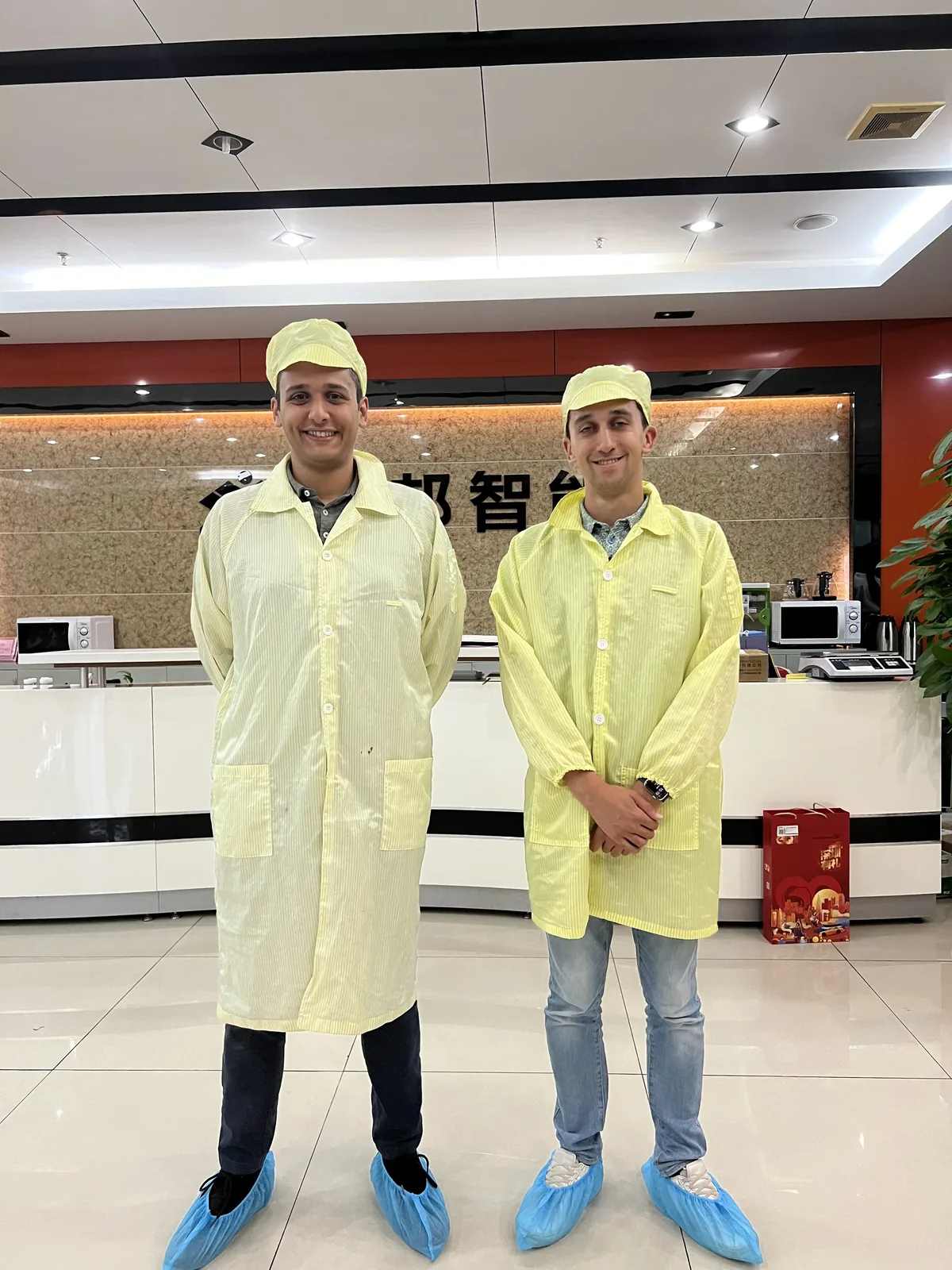
Our Shenzhen-based quality engineer can be on site for pilot builds, inspections, and production issues, working directly with the factory while the Delft team stays connected to the product's engineering.

We built our own way to see what the factory sees
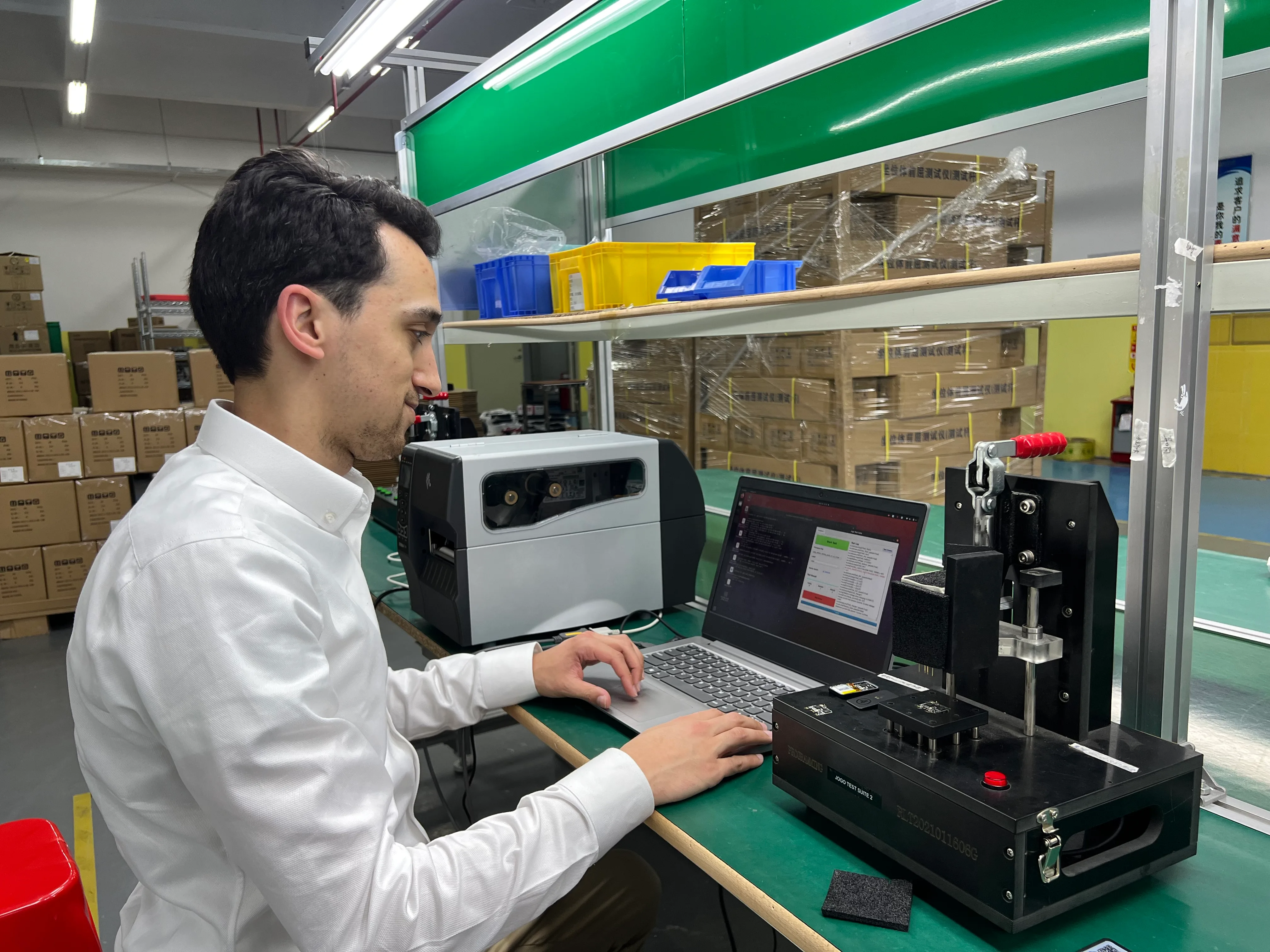
PogoBot is our cloud-connected PCBA test fixture platform. It runs product-specific test sequences and sends results to Insyght Console, where you can tie each unit to its measurements, test results, and firmware history.
That means production quality is not only a pass/fail report at the end of the batch. You can follow yield, retests, and individual device history while the line is running.
Every unit leaves a data trail
Insyght Console logs test results, AOI scores, and production metadata per serial number. When a field return lands on your desk, you know exactly what happened on the line.
What production readiness looks like in practice
JOGO: every unit tested before it shipped
For JOGO, the product had to move from a working insole sensor to repeatable production. We built a custom PCBA test fixture so every unit was checked on the line, then added per-unit QR labels to make pairing and product identification part of the manufacturing flow.
Read the JOGO storyX-Skills: testing built for scale
For X-Skills, we built a mass-production test fixture around the product's required checks, turning manual quality control into a repeatable production step as volumes increased.
Manufacturing questions
When is a working prototype ready for production?
A successful demonstration is one piece of evidence. Before release, check the representative design against its requirements, prepare the applicable conformity documentation, and validate assembly and test procedures in a pilot run. Also test installation, packaging and support arrangements. Agree acceptance criteria before committing to the next batch.
What does a golden sample prove?
A golden sample is an approved reference for the intended build. It helps suppliers compare the agreed execution, but it does not prove that every unit in a batch meets the requirements. Repeatable processes, test limits, inspection and retained results provide that additional evidence.
Does HALT prove the product will last a specific number of years?
No. Highly Accelerated Life Testing applies increasing stresses, such as temperature and vibration, to expose weaknesses. It supports design improvement but does not on its own establish a service-life claim. Reliability evidence must match the product, its usage profile and the specific claim.
Can you manufacture a product you didn't design?
Yes. We can start from an existing design, but we review the PCB, enclosure, BOM, and test strategy before committing it to production. If something is difficult to build or test reliably, we want to find that before the pilot run rather than during volume production.
What happens before volume production starts?
We review the design for manufacturability and testability, build first articles or a pilot batch, qualify the production and test flow, and resolve open issues before releasing larger volumes.
How do you test each unit during production?
The test plan depends on the product. It can include AOI, in-circuit testing, functional testing, and an end-of-line check, with product-specific measurements and limits built into the production fixtures.
Can we see production quality remotely?
Yes. PogoBot test fixtures can send unit-level test results into Insyght Console, where you can follow yield, retests, and production history without waiting for a batch report.
Do you handle shipping after production?
If included in the scope, we can coordinate batch release, logistics, customs, and delivery to your warehouse or directly to customers.
We had this idea for a sensor that fits inside a football shoe and tracks your performance in real time. Insyght took it from concept all the way to a working product: the hardware, the ML firmware, production, everything. What sold us is that they had done it before and knew what to do. The product ended up being picked up by 433 and scaled further.

Explore More Services

Let's talk about your production ramp.
Share your volumes and timeline, we'll map out the path.
