From idea to a working prototype in weeks
A prototype you can test, demo, and take to an investor, built with the path to production in mind from the start.
Rapid prototyping here does not mean bolting together something that works once. It means getting a device into your hands that you can genuinely test: with users, in the field, or in a pitch. Where it makes sense, we use production-relevant components and architecture, so moving from prototype to production is an evolution, not a restart.
In practice, a first working unit can often exist within weeks. Not because we type faster, but because we know which parts are actually in stock, which development boards let us avoid custom hardware too early, and where you should not be optimising yet.
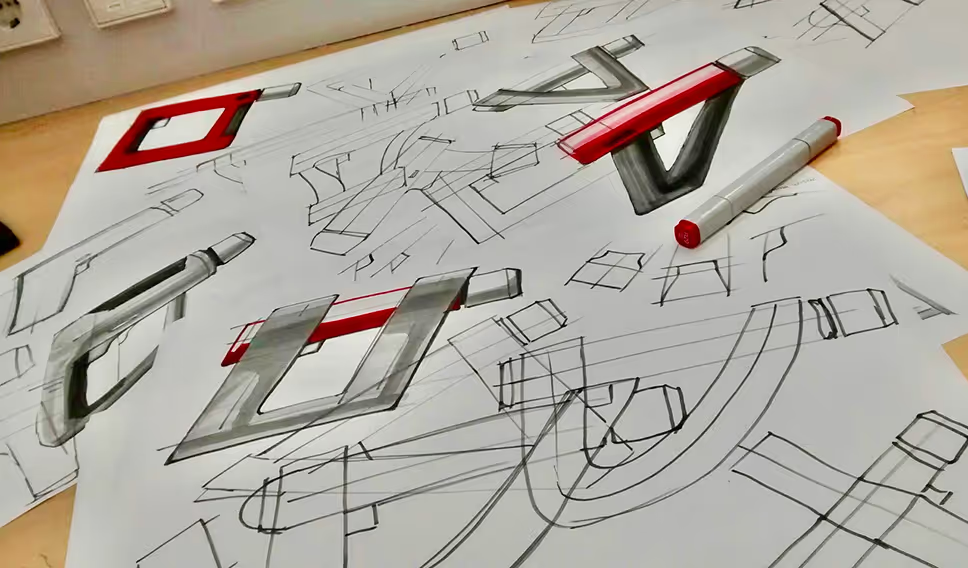
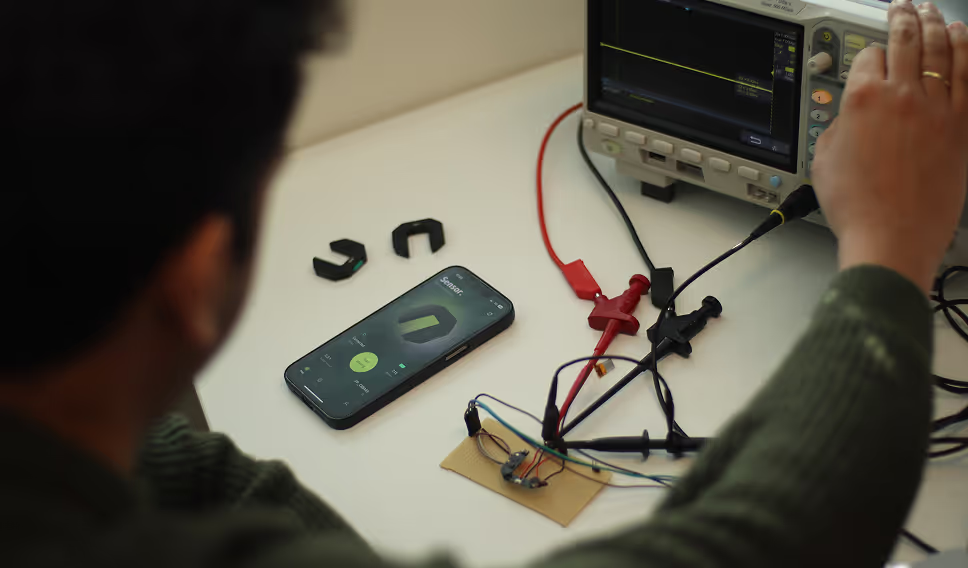
What you get
Working electronics
A board or module setup that really performs your functions: reading sensors, sending data, running on a battery.
An enclosure you can hold
3D printed, the right size, good enough to test with and to show people.
Firmware that does the job
Not a demo script but real firmware, so the measurements you take actually mean something.
An honest verdict
What worked, what did not, and what that means for cost, certification and production.
What “rapid” does not mean
Speed comes from choices, not from rushing. A prototype in weeks works because we keep the scope small and build on existing blocks, not because we skip steps that will have to happen later anyway.
A prototype is also not a product. It is not certified, not tested for ingress, and not ready for a factory. What it does is answer the expensive questions early: does the battery last, is the range enough, do users understand it. A mistake you find here costs hours. The same mistake in production costs months.
At the end we tell you plainly what we see. Sometimes that is that it works and you can go on. Sometimes it is that the approach will not scale and you are better off trying something else. At this stage, that is cheap news.
How we run it
Scope in one session
We agree what the prototype has to prove. Cut anything that doesn't serve that, which is where the speed comes from.
Build on existing blocks
Where we can, we use readily available development boards and modules. A custom board only where it is genuinely needed.
Test and adjust
You get the device in your hands, and we adjust to what you run into, not to what we assumed up front.
The route to production
By the end, you know what it takes to make this a real product: which parts need to go custom, what the likely certification path looks like, and which steps still sit between the prototype and production.
Choose what the electronics prototype must prove
Rapid prototyping works best when the next decision is clear. You might need to verify a measurement, test battery life or put a device in a customer’s hands. We choose the build around that question.
A proof of concept or a custom board
Development boards can establish whether a function works. A custom PCB becomes useful when size, connectors, noise or power consumption determine the outcome. We agree which of these you need before designing it.
A testable handover
Agree which functions will work, the test setup, the results to record and the limitations to document. Specify whether the phase includes an enclosure, firmware, an app connection or design files.
Time and cost depend on scope
A module-based experiment has different lead times from a custom board with assembly and a revision. We separate engineering, components and fabrication in the estimate and identify dependencies before setting a delivery date.
A useful starting brief
Send the problem you want to solve, what you have already tried, the test environment and the decision the prototype must support. Photos of a breadboard or a rough sketch are useful starting points.
Frequently asked questions
Which assumption should we test first?
Start with the uncertainty that could change your next investment. Sensor performance needs a technical experiment; comfort may need a physical model; installation needs an observed user test. Define what a successful result looks like and what the prototype cannot prove before building it.
How do we test whether customers want the product?
Let relevant users try a concrete task and observe where they struggle without immediately helping. Separately, test the proposition with conversations or a clearly labelled concept page. Discuss a realistic price. Likes and ad clicks indicate interest, but do not establish willingness to pay or technical feasibility.
How long does a hardware prototype take?
For most projects, a first working unit exists within a few weeks. The timeline depends on what the prototype needs to prove: a proof of concept on development boards is fastest, while a prototype that needs a custom PCB takes longer because you have to fabricate and assemble the board.
Do you build on development boards or a custom PCB?
Whichever gets you a testable device soonest. We start from off-the-shelf modules and development boards where they fit, and design a custom board only when size, power consumption, or the measurement requirements make it necessary.
Can I sell the prototype or show it to customers?
A prototype is not intended for commercial sale yet. It has not gone through the applicable compliance, certification, and production-validation steps for the markets where the finished product will be sold. Those come after the prototype has proved what it needs to prove. Demonstrations and user trials also need a suitable safety and compliance assessment; they are not automatically exempt.
What does a rapid prototype cost?
It depends almost entirely on scope: how many functions have to work, whether a custom board is needed, and how much firmware sits behind it. We scope that in the first session and give you a cost range before anything is built.
What happens after the prototype?
You get an honest assessment of what worked and what it takes to turn this into a product: which parts should go custom, what the likely certification path and budget look like, and which production steps are still ahead. From there, we can continue into full product development, or you can take the results elsewhere.
We had this idea for a sensor that fits inside a football shoe and tracks your performance in real time. Insyght took it from concept all the way to a working product: the hardware, the ML firmware, production, everything. What sold us is that they had done it before and knew what to do. The product ended up being picked up by 433 and scaled further.

Explore More Services

Got an idea you want to test quickly?
Tell us what the prototype has to prove and we will tell you what is achievable in a few weeks.
